Football Outline SVG: A Designer’s Real-World Embroidery Review
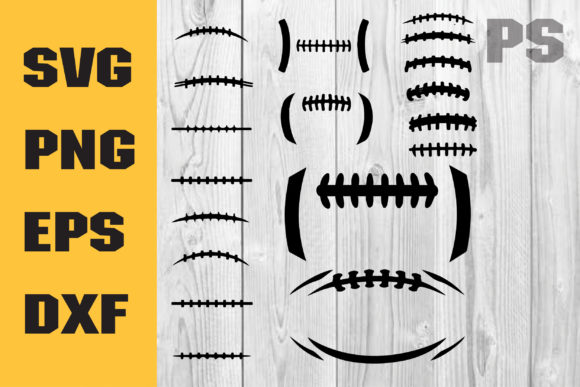
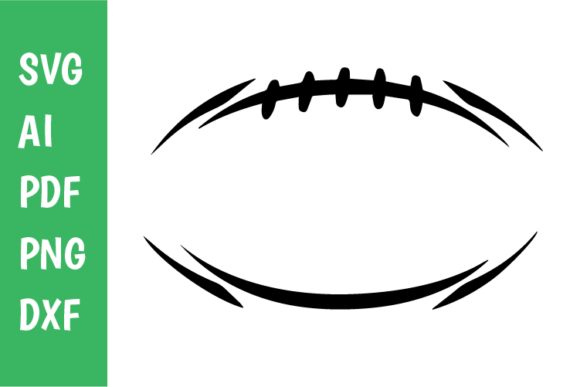
As a designer who’s stitched hundreds of custom pieces—from baby onesies to boutique aprons—I opened Football Outline SVG expecting something clean and versatile. What I found was a confident, minimal silhouette: no shading, no clutter, just the unmistakable curve and laces of a classic football, drawn with purposeful simplicity. It doesn’t shout—it suggests. That’s its strength. And that’s also where your judgment needs to kick in before committing thread, time, or client trust.
First Impressions: When Simplicity Meets Stitching Reality
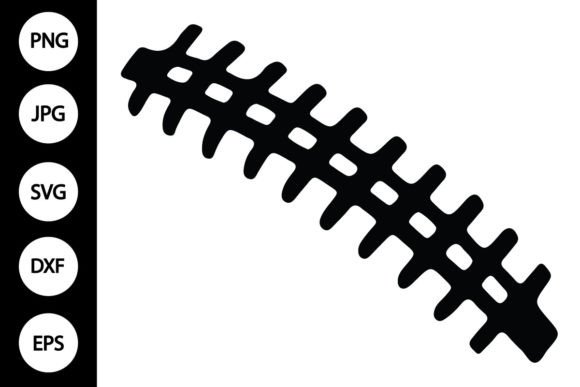
The outline is crisp but not rigid—there’s subtle rhythm in the lace lines, enough personality to feel handmade, not clipart. It reads instantly as “football,” even at small scales, which matters when you’re embroidering a toddler’s cap or a pocket-sized patch. But here’s what I noticed right away: this isn’t an appliqué design or a dense fill-stitch emblem. It’s a line-based graphic—ideal for running stitch or fine satin stitch borders, not bold statement embroidery. That shapes everything: how it behaves on fabric, how it holds up after washing, and where it earns its keep in your craft business.
A Real Project Test: Embroidering a Custom Tote for a Little League Coach
I used Football Outline SVG on a natural canvas tote—medium-weight, tightly woven, lightly textured. Hooped with medium tear-away stabilizer, stitched in navy 40-weight poly thread. The result? Crisp, legible, and quietly professional. Not flashy—but exactly what a coach wants on a practical, everyday bag: recognizable, gender-neutral, and ageless. Customers don’t buy footballs—they buy identity, pride, belonging. This design delivers that without overcommitting. It didn’t overwhelm the fabric, didn’t snag during stitching, and held its shape through two rounds of gentle machine washing.
Where It Shines (and Where It Needs Caution)
- Custom apparel: Works beautifully on crewnecks, sweatshirts, and raglan tees—especially when placed subtly on the chest or sleeve. Avoid large-scale fills; lean into single-line execution.
- Tote bags & tea towels: Excellent scale and contrast. The outline reads clearly against both light and dark backgrounds—no need for underlay tricks.
- Baby embroidery: Perfect for onesies or burp cloths—soft, non-distracting, and safe for sensitive skin (low stitch density = less bulk).
- Patches & caps: Use with caution. On curved surfaces like front panels of baseball caps, test first—the laces can distort if digitized too tightly. Also, avoid ultra-thin fabrics (like lightweight cotton poplin) without proper cut-away stabilizer.
- Dark or textured fabrics: The outline stays readable, but confirm thread color contrast in mockups. Navy on black works; light gray on charcoal may disappear.
What This Design Says About Your Craft Business
Using Football Outline SVG signals intention—not just decoration. It fits naturally into collections for sports-themed nurseries, team gift bundles, or school spirit merchandise. For Etsy sellers and small shop owners, it’s a low-risk, high-recognition asset: easy to pair with monograms, names, or season-specific accents (think “Future MVP” or “Coach’s Corner”). It doesn’t compete with your brand voice—it supports it. And because it’s clean and scalable, it translates well across digital embroidery files, printable mockups, and even screen-printed versions for consistency.
Practical Notes Every Embroidery Designer Should Check
- Test on scrap fabric first—especially if stitching on stretchy knits or fleece-lined sweatshirts. Running stitch outlines behave differently on each surface.
- Review stitch density before scaling up. Thin lines can vanish or break apart if enlarged beyond recommended proportions.
- Confirm hoop size compatibility. While the SVG itself is scalable, your machine’s maximum hoop area dictates real-world use—don’t assume it’ll fit a 5x7 without checking the actual stitch layout.
- Inspect small details—the lace intersections and tip curvature must remain distinct at your intended size. Zoom in digitally before sending to your machine.
- Try black-and-white mockups to gauge clarity on light vs. dark garments. Sometimes contrast isn’t about color—it’s about negative space.
- Use appropriate stabilizer: medium tear-away for stable wovens, cut-away for knits, and fusible + tear-away for lightweight or sheer fabrics.
- Verify licensing terms—the listing confirms personal and commercial use, but always double-check whether resale of finished embroidered items (e.g., on Etsy) or redistribution of the digital embroidery file is permitted.
Final Thought: A Quiet Workhorse, Not a Showstopper
Football Outline SVG won’t win design awards—and it shouldn’t. Its value lies in reliability, adaptability, and quiet professionalism. It’s the kind of embroidery file you reach for when you need clarity over flair, recognition over novelty, and ease over effort. Whether you’re building a craft business around personalized gifts, stocking a boutique with seasonal merchandise, or creating custom apparel for local teams, this design earns its place—not by standing out, but by fitting in, thoughtfully.
If you're sourcing graphics for Crafts or Graphics collections—especially those aimed at sports, kids, or community-focused handmade products—Football Outline SVG is a grounded, versatile, and commercially sound choice. Just remember: great embroidery starts with smart selection, not just beautiful files.